FarmBoy WorkoutFind my plan

Strength training for farmers and ranchers.

We went through the research on what farm work wears down first, then built workouts to rebuild it, with the tools already in your barn.

Caution Check with your doctor before you start. Results vary from person to person.

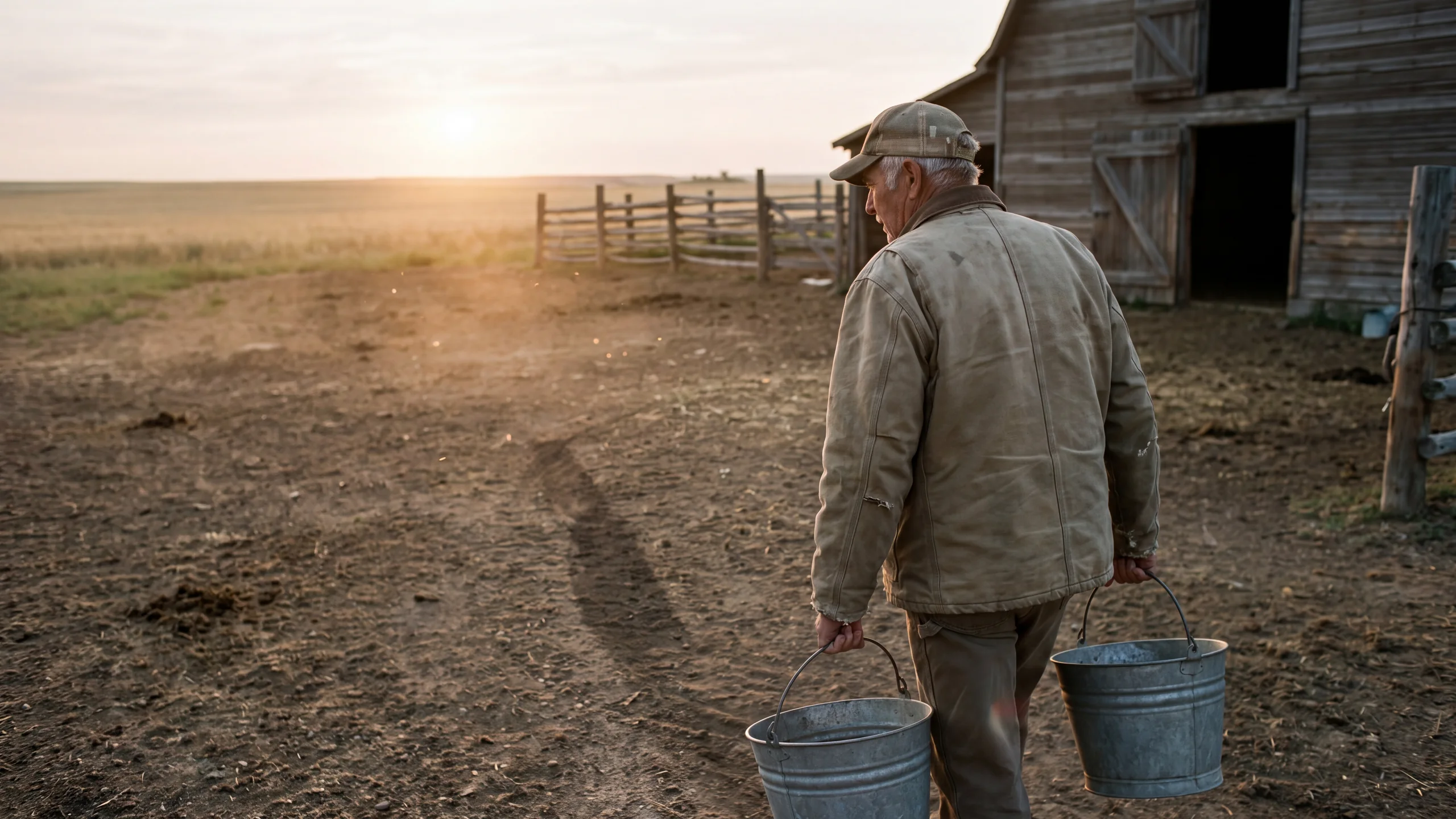
A farmer seen from behind carries two full feed buckets across a barnyard toward the barn at first light.
Morning chores, two full buckets. The program trains for this.

Read the studies

What farm work wears down first

What published research on farm work points to, and the move we use for each spot.

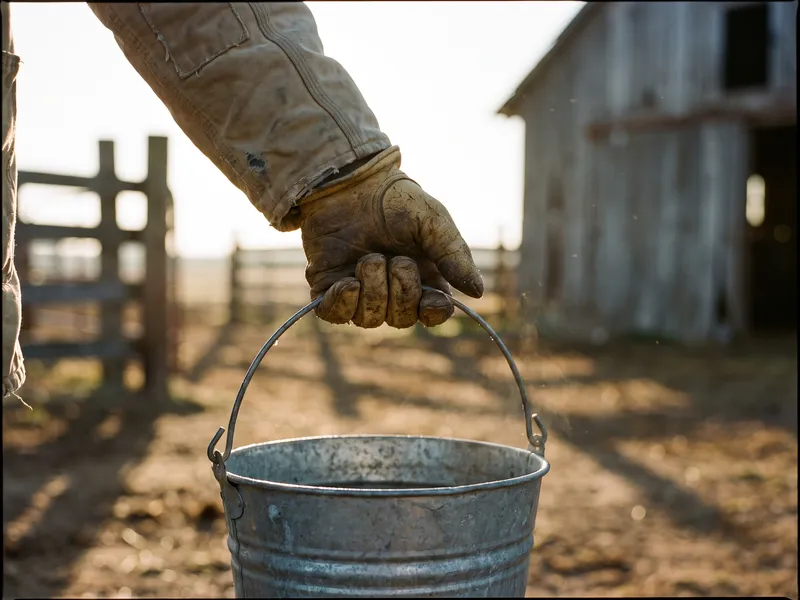
A worn work glove grips the wire handle of a galvanized bucket in a barnyard at first light.
One full bucket asks for grip, back, and shoulders at once.
  1. Knees

    A pooled analysis of 71 studies found higher odds of knee osteoarthritis in people with physically demanding jobs, and agricultural work was one of the higher-risk groups. Wang et al., 2020

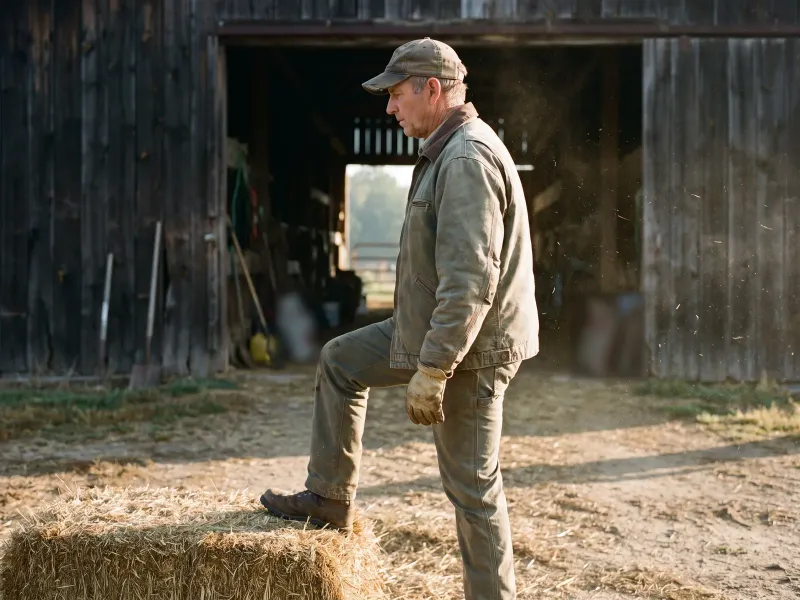
    The move Bale step-ups and slow split squats build thigh and hip strength for kneeling and climbing.

  2. Low back

    A review of 24 studies worldwide found about 48% of farmers reported low back pain in the past year, and 75% had it at some point in life. Osborne et al., 2012

    The move Bucket hinges and one-sided carries train the hips and trunk to share the lift.

  3. Shoulders and neck

    In a survey of 518 Midwest farmers, about 31% reported neck or shoulder pain in the previous two weeks. Fethke et al., 2015

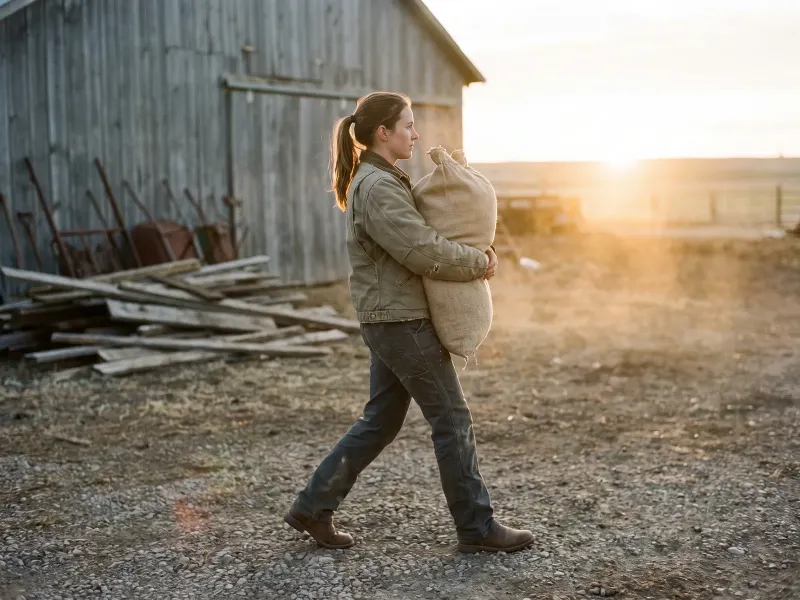
    The move Sack rows and two-bucket carries work both sides and the upper back.

  4. Balance

    The US Preventive Services Task Force recommends exercise programs for adults 65 and older who are at higher risk of falling. US Preventive Services Task Force

    The move Single-leg stands at the fence post train balance for rough ground and cab steps.

These studies show what farm work tends to wear down. They don't prove what causes it. See all the research we read

Contents

Three tiers, matched to how your body is today

Each tag flips over to show a sample week.

12 weeks

Foundation

For
Real mobility limits, sore joints, or new to structured exercise.
Contents
Gentle stretches, balance work, and light lifting that are easy on the joints. Every move stays short of pain.
Price
$49 one-time
Start Foundation

Directions: an example week

Foundation

  1. Mon Mobility in the yard, 20 min
  2. Wed Light bucket work and balance, 20 min
  3. Fri Mobility and sit-to-stand, 20 min

Caution Check with your doctor before you start. Results vary from person to person.

All of Foundation
12 weeks

Back in Shape

For
Moderately active, doing the work, starting to feel it.
Contents
Strength work aimed at muscle and bone, plus farm-tool resistance that goes up week to week.
Price
$69 one-time
Start Back in Shape

Directions: an example week

Back in Shape

  1. Mon Legs and hinge with buckets, 25 min
  2. Wed Carries and pulls with sacks, 25 min
  3. Fri Step-ups and balance, 25 min

Caution Check with your doctor before you start. Results vary from person to person.

All of Back in Shape

12 weeks

Full Strength

For
Few mobility limits and ready to push.
Contents
The hardest farm-equipment conditioning: tire work, heavy carries, and loaded bale work.
Price
$79 one-time
Start Full Strength

Directions: an example week

Full Strength

  1. Mon Heavy carries and hinge, 30 min
  2. Wed Tire flips and sledge, 30 min
  3. Thu Mobility, 15 min
  4. Sat Bale and post conditioning, 30 min

Caution Check with your doctor before you start. Results vary from person to person.

All of Full Strength

Uses

Workouts with what is already in the barn

Chores, and pushing through the pain, work the same muscles every day. Gym programs assume a gym, free evenings, and a fresh body. These workouts start with what is already in your barn.

What have you got?

Showing all 9 example moves.

  • Two-bucket carry

    Uses: buckets

    Even weight in each hand, tall walk to the gate and back.

  • Bucket hinge

    Uses: buckets

    Push the hips back, flat back, stand up through the heels.

  • Bale step-up

    Uses: hay bales

    Step up slow, step down slower. Same legs as the cab steps.

  • Bale sit-to-stand

    Uses: hay bales

    Sit down on the bale and stand up without your hands.

  • Fence-post balance

    Uses: fence posts

    One hand on the post, one foot up, thirty seconds a side.

  • Tire flip

    Uses: tractor tires

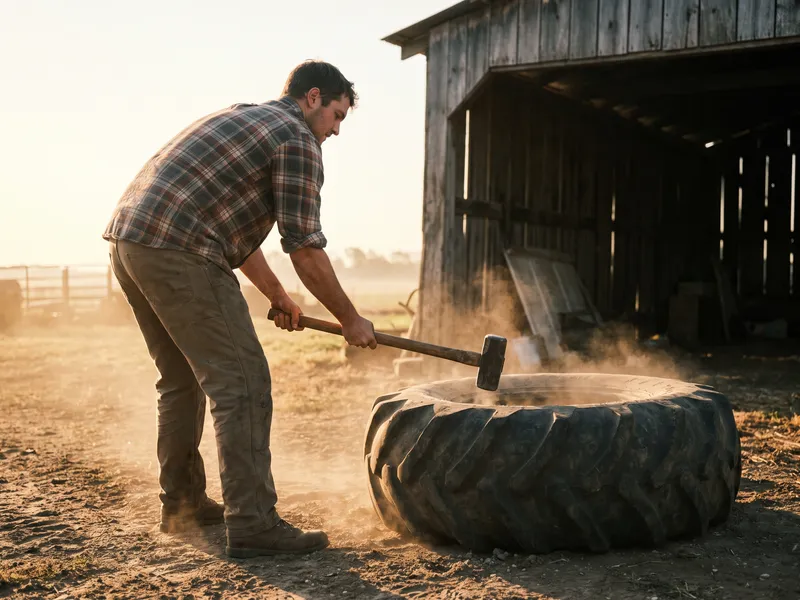
    Low hips, chest up, drive it over with the legs.

  • Feed-sack row

    Uses: feed sacks

    Pull the sack to your ribs, both sides, squeeze the shoulder blades.

  • Slow split squat

    No equipment needed

    Short range at first, back knee only as low as feels good.

  • Suitcase carry

    Uses: dumbbells

    Weight in one hand, stay level, switch at the fence.

How to use it

Sized to fit a working day

A session runs about as long as morning feeding. Three days most weeks.

Example: one Back in Shape session, 25 minutes

  1. 5 min Loosen up. Hip circles and arm swings.
  2. 15 min Strength. Bucket hinges, bale step-ups, sack rows.
  3. 5 min Balance and finish. Fence-post stands and an easy stretch.

From the work

Stories from the work

Illustrative stories, not customer quotes

  • I do the bale step-ups in the barn after evening feeding, three nights a week. Twenty minutes, then supper.

    Cow-calf operator, Nebraska Illustrative

  • I figured milking twice a day was plenty. It's the same few motions. The sessions work the rest.

    Dairy farmer, Wisconsin Illustrative

  • Dad would never set foot in a gym. A plan built on buckets and fence posts, he would try. We do the balance work together on Sundays.

    Grain farmer's daughter, Iowa Illustrative

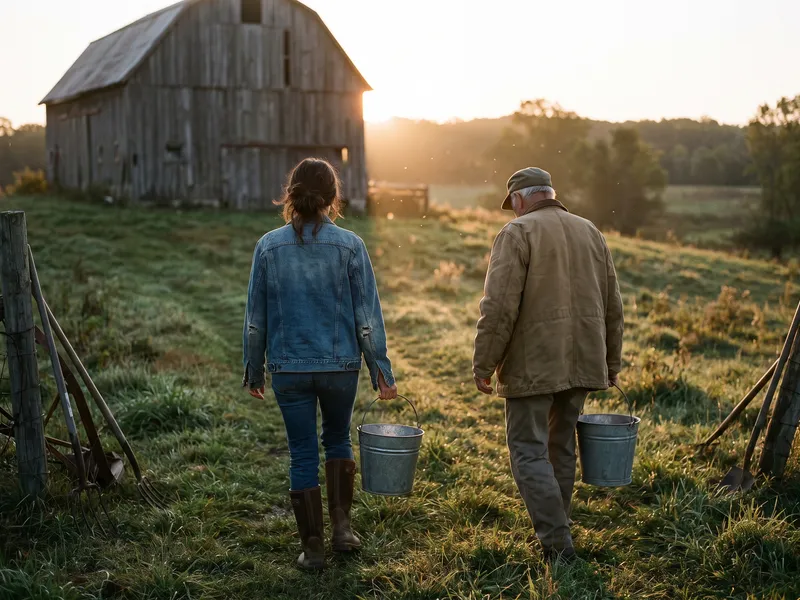
A young woman and an older farmer walk side by side toward a weathered barn at sunrise, each carrying a bucket.
Chores together is a fine place to start.

For

For your folks: helping a parent who farms

Maybe your dad still does chores at 70 and won't hear the word gym.

Answer Find my plan for them. We suggest a tier built on the tools they already use.

Price

What it costs

One tier, or the whole library. Prices in US dollars.

Caution Check with your doctor before you start. Results vary from person to person.

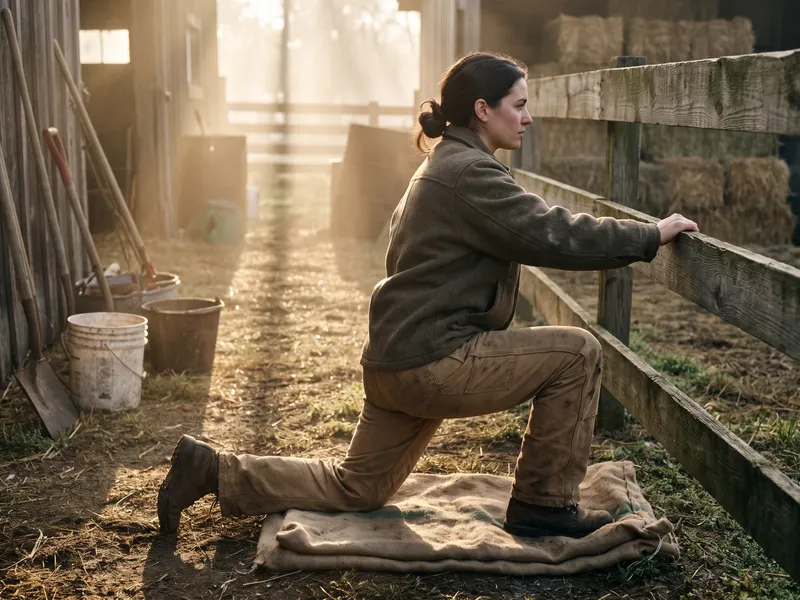
A farmer kneels on a folded feed sack in a half-kneeling stretch, one hand on a wooden fence rail inside the barn.
Half-kneeling at the fence rail.

Free sample

Try the free mobility routine first

A short set of moves for the yard, in work boots, with a fence rail, a bucket, a hay bale, and a feed sack. Try it for a week before you spend a dollar.

The paid programs add strength work and a 12-week plan matched to your body.

Try the free routine

Questions

Questions farmers ask

Do I need this if chores keep me moving all day?

Chores repeat the same few movements, often on the same side. The programs train what chores miss: the stabilizers, balance, and the other side of the body.

Is it safe to start with knees that already hurt?

Check with your doctor before you start any program. Foundation is joint-safe and works in a pain-free range first. If a move hurts, stop it.

I have no gym and not much time. Will it work?

Sessions run 15 to 30 minutes, three or four days a week, with buckets, bales, posts, tires, or feed sacks.

Is this bodybuilding stuff?

No. There is no stage, no before-and-after, no supplements. It is strength for the work you already do.

What does it cost?

One tier is $49 to $79 one-time. Membership is $12 a month or $99 a year for every tier.

What do I get when I pay?

A digital 12-week plan, delivered online.

Can I buy a plan for my dad or mom?

Yes. In Find my plan, pick someone else on the first step and answer for them. Ask them to check with their doctor before they start.

Find your plan

A few questions about your body and your barn, then a suggested tier with its price, before you order.

Caution Check with your doctor before you start. Results vary from person to person.